Securing modern enterprise networks and proprietary data assets requires a highly thorough onboarding pipeline for all specialised personnel. This industry-wide change comes as a direct response to the increasing complexity of credential inflation and unauthorised employment documents.
To safeguard corporate property and ensure continuous regulatory alignment, businesses rely on a structured system of employee background verification India to validate the finer points of a candidate’s professional timeline.
Evaluating these criteria allows management to build a transparent, low-risk corporate environment. Investing in a highly precise screening method is essential for protecting long-term institutional stability.
Table of Contents
ToggleEvaluating Core Vulnerabilities in Modern Hiring
An official background evaluation looks closely at an applicant’s professional and economic consistency over time. Instead of auditing basic daily tasks or creative skills, this tracking system uses official state and corporate registries to confirm past career steps.
Hiring committees utilise these data points to understand potential compliance risks long before an individual is granted access to significant financial accounts or administrative systems. This layer of protection is common for individuals joining teams that handle private client data, proprietary software code or corporate spending pipelines.
Most professionals run into these audits when entering sectors like corporate finance, tech infrastructure and digital banking platforms. Upper-tier management candidates face similar deep reviews because executives hold direct procurement authority and strategic budgetary control.
The Purpose Behind Background Verifications
Assessing Monetary Stress
Organisations initiate these specific checks to identify instances of severe financial duress or intense monetary stress within their talent pipeline. Pinpointing these underlying personal pressures allows a business to evaluate potential vulnerabilities from a wider perspective, keeping the workspace secure against external hazards.
Confirming Career History
Physical paper files are notoriously easy to alter or fabricate independently. Cross-referencing an applicant’s historical timeline against official institutional contributions guarantees that past titles and tenures match authentic corporate timelines.
Asset and Data Protection
Teams dealing with sensitive intellectual property or large capital reserves require high levels of mutual trust. Management evaluates past behavioural indicators to guard against insider security breaches or internal non-compliance.
Regulatory Alignment
Many modern sectors work under strict government mandates that require uncompromising corporate governance. Global operations deploy these structured verifications to secure consistent statutory clearance both domestically and internationally.
Standard Operational Records Used for Validation
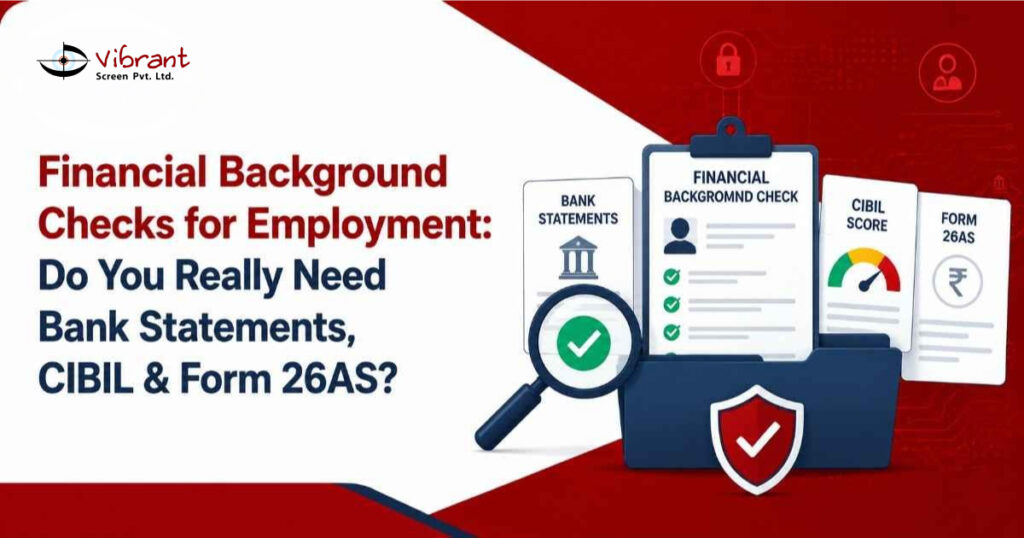
Institutional Income Documentation
Official income records clearly show how a person’s career and earnings have progressed over time. Screening teams rely heavily on these public ledgers because they show a clear history of past employment, proving that a candidate was active on a verified corporate payroll during those exact windows.
Debt Summaries and Risk Profiles
An authorised credit overview shows an individual’s historical borrowing patterns and long-term repayment consistency. Banking units and modern technology firms review these patterns during early onboarding to assess overall responsibility, ensuring professionals assigned to manage major portfolios demonstrate stable risk management practices.
Account Verification Records
Screening teams review verified banking transactions from past tenures to ensure past compensation details match the exact figures stamped on loose physical payslips. This step confirms that regular electronic deposits were completed successfully through standard banking networks, ensuring that every phase of financial document verification matches perfectly.
Protocol, Consent and Regulatory Compliance
A background verification company works strictly for the employer, delivering final reports on an “as-is” basis. These checks are never a surprise invasion of privacy. Screening agencies do not deal with job applicants directly during this process. Instead, they collect and store the necessary information entirely on behalf of their corporate clients.
Under the official National Skills Registry (NSR) NASSCOM guidelines, screening teams are authorised to collect these details from the client company but only if the candidate signs a formal Letter of Authorisation (LOA). This clear step ensures that all data collection respects both candidate consent and industry rules from start to finish.
Information Security Measures for Sensitive Records
Because career and revenue histories contain highly personal identifiers, managing this information requires exceptional corporate data discipline. Professional screening firms protect candidate records from external exposure by enforcing rigid operational walls:
- Mandatory Authorisation: No background pipeline can be activated until the applicant reviews, signs, and uploads a formal Letter of Authorisation.
- Isolated Data Access: Sensitive candidate files stay completely restricted within specialised risk-compliance teams instead of being shared across the general human resources floor.
- Enterprise Data Encryption: All official state registries and text records are stored safely on closed, access-controlled cloud platforms to block internal leaks.
Alternative Methods for Verifying Past Tenures
If standard financial records are unavailable or require alternative proof, applicants can submit different official materials to validate their previous positions. These choices satisfy corporate evaluation mandates while keeping personal data submission simple:
- Annual Tax Certifications: Offering annual tax summaries provided by previous employers to verify total yearly income and official corporate association.
- Direct Enterprise Outreach: Requesting the main corporate entity to initiate a direct human resource confirmation via official company email networks.
- Official Relieving Documents: Submitting the original corporate onboarding offer letter along with a formal, signed relieving certificate.
Handling Documentation Gaps During Onboarding
If an applicant chooses to withhold specific files or cannot provide the necessary records, the background verification timeline is instantly paused. The screening agency holds the active file in abeyance, halting the evaluation until the client’s business gives clear instructions or confirmation on how to move forward.
Depending on the specific internal risk policies of that corporation, the hiring team might choose to review alternative employment proofs or alter the onboarding criteria based on the unique security clearance of that position.
Professional Guidance for Job Applicants
Professionals preparing for an enterprise-level employment background check can streamline their validation timeline by using a few practical steps:
- Analyse the Waiver: Read through the Letter of Authorisation thoroughly to see exactly what specific historical details the screening team will be evaluating for the role.
- Keep Tax Records Accessible: Maintain organised digital copies of your annual employer tax summaries, as these serve as universally recognised proofs of work history.
- Double-Check Your Resume: Ensure all employment start and exit dates, and compensation history, match exactly with your official corporate records.
Building a Secure and Compliant Screening Strategy
Hiring executives must design their screening frameworks with clear, targeted operational goals. Evaluation steps should always match the specific duties of the open position, preventing unnecessary data harvesting when a basic institutional record can verify a career timeline.
Cooperating with an accredited background verification team ensures that your corporate talent pipeline remains secure, compliant, and highly efficient. Delegating these operations to elite background check companies in India keeps your business safe from compliance gaps while ensuring candidate files are processed through secure, source-verified workflows.
Conclusion
Thorough background checks are a practical necessity for stopping resume inflation before it affects operations. While human resource teams must respect candidate boundaries, verifying a few baseline details is often the only way to build a safe, reliable workplace. Using straightforward authorisation workflows lets a business grow its headcount safely without creating data risks.
Secure Your Talent Pipeline with Vibrant Screen
Protecting your business requires a specialised verification partner with deep industry authority. Partner with Vibrant Screen to launch compliant, defensible screening models across your entire enterprise.
Backed by more than 24 years of local field experience and a prestigious Platinum category accreditation from NSR NASSCOM, Vibrant Screen provides automated, source-verified check systems within a swift 24-hour delivery window. Contact our advisory group today to bring an enterprise-grade background check for employment protocols into your onboarding process.