Table of Contents
ToggleWhy Identity Verification Matters More in 2026
How certain are you that the candidate who just accepted your job offer is exactly who they claim to be on paper? The daily routine for Indian hiring managers changed heavily over the past year. Sophisticated editing tools, altered digital documents and synthetic identities have made visual-only document checks increasingly unreliable.
For growing organisations, manual checking can no longer keep up with clever counterfeits. Guarding your business requires a direct shift toward instant, source-backed checking. Indian companies are recognising that securing work processes depends entirely on fast, secure and strictly consent-based verification steps.
Confirming real details early in the hiring cycle does more than just stop fraud. It can reduce paperwork delays, support safer access decisions and help businesses prepare for evolving privacy and data-protection obligations in India.
What Is Identity Verification?
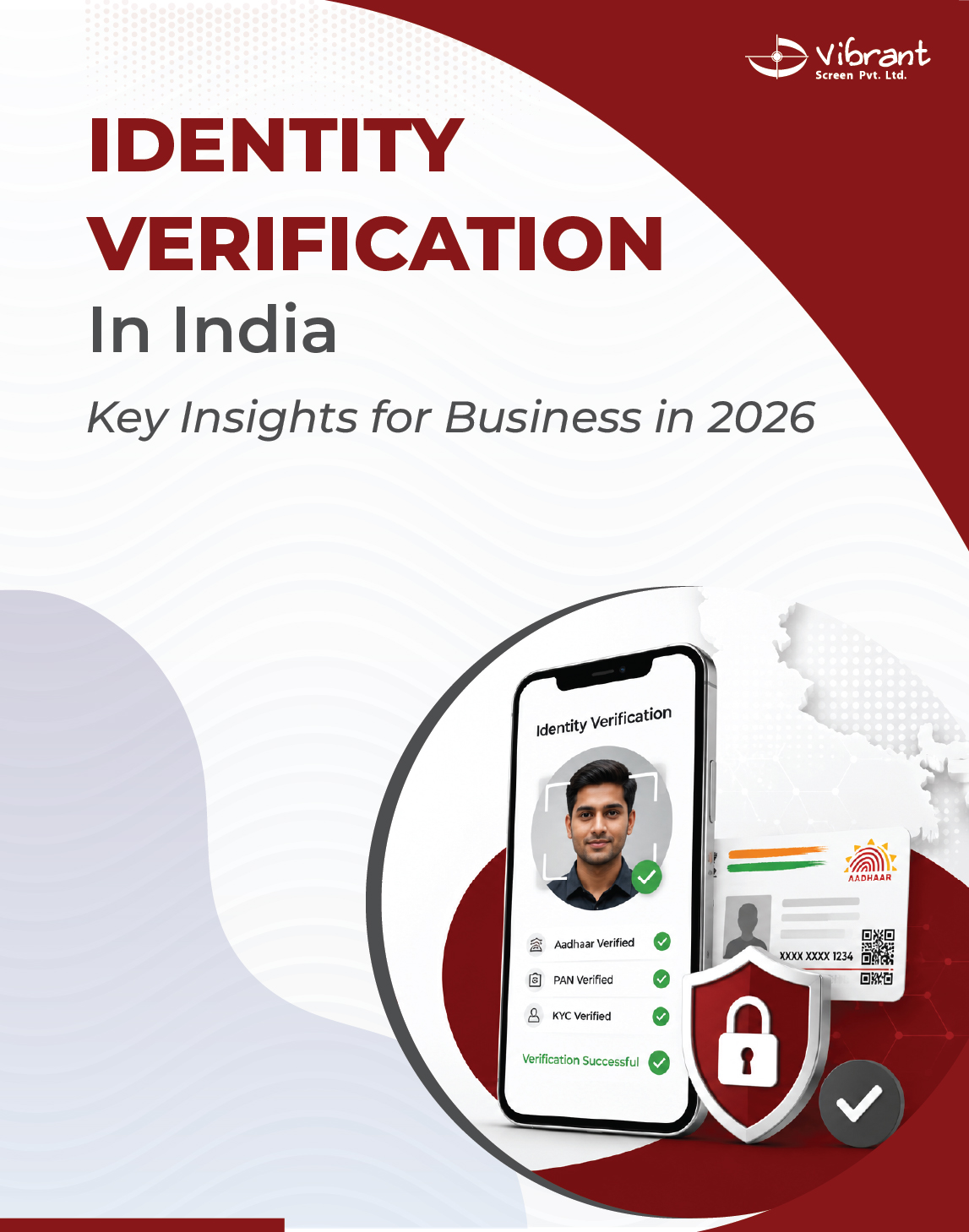
Identity verification is the step-by-step process of validating a person’s legal and physical existence using official registries. Depending on the organisation’s policy and the individual’s available documents, commonly supported identity checks include PAN, Aadhaar, Passport, Voter ID and Driving Licence.
The five primary components include:
- PAN Verification: Checking whether the PAN is active and whether details such as the name and date of birth match the available PAN records.
- Aadhaar-Based Verification: Using permitted, consent-based digital or offline Aadhaar verification mechanisms to validate identity information without relying only on a visual review of a card copy.
- Passport Verification: Validating passport details and document authenticity through available authorised sources and document-analysis checks.
- Voter ID Verification: Confirming active registration status and personal identifiers against the Election Commission of India databases.
- Driving License Verification: Checking the licence status, holder details, validity period and authorised vehicle classes through available transport records.
Why Indian Businesses Need Stronger Identity Verification in 2026
Relying on candidate-submitted soft copies is a major business weakness. Solid risk management requires an active screening process at the very point of entry.
Mitigating Risks at the Onboarding Gate
- Reducing Fraudulent Onboarding: Using advanced employee identity verification in India helps identify identity mismatches, impersonation risks, fraudulent documents and possible proxy-hiring attempts before onboarding.
- Preventing Impersonation: Validating live data prevents proxy hiring, where one individual passes an online interview and a completely different person logs into the system to work.
- Supporting Compliance Expectations: Clear verification records and audit trails can support internal governance, client requirements and compliance reviews.
- Protecting Corporate Data: Securing customer records, financial lines and proprietary code bases starts with knowing exactly who holds the access keys.
- Accelerating Onboarding Decisions: Faster digital checks can help HR teams make earlier, better-informed onboarding decisions.
- Building Business Trust: Clean, verified internal teams establish immediate credibility with external global clients and institutional investors.
Key Identity Verification Trends in India for 2026
The practical setup for corporate screening has evolved past basic periodic checks. Five distinct operational movements dominate the market.
1. Real-Time Verification APIs Are Becoming the New Standard
More organisations are introducing API-based checks alongside existing workflows to reduce manual data entry and speed up onboarding. This change provides instant match results during the initial application flow, reducing drop-off rates and keeping hiring pipelines moving.
2. AI-Powered Fraud Detection Is Now Essential
Basic document scans cannot catch high-resolution digital edits or altered font layers. Advanced screening now uses smart fraud engines that can analyse document inconsistencies, metadata, image quality, and other indicators of possible manipulation.
3. Identity Intelligence Is Moving Beyond Basic Document Checks
A valid ID number is meaningless if it belongs to someone else. Modern screening systems pair database checks with advanced live facial recognition and liveness tests. This compares the person completing onboarding with the photograph on the submitted identity document while liveness checks help detect spoofing attempts.
4. Consent and Data Protection Are Becoming More Important
With stricter domestic privacy laws governing personal data and corporate accountability, unrecorded checking is a major legal liability. Businesses should use a documented, purpose-specific consent process and clearly explain what information will be checked, how it will be used and how it will be protected.
5. Continuous Verification Is Gaining Importance
An identity check executed on day one does not guarantee compliance in month twenty-four. Enterprises are increasingly using periodic re-verification cycles to ensure their high-security roles, financial handlers, and vendor networks maintain clean records over time.
Major Identity Verification Challenges for Indian Businesses
Managing an internal screening desk reveals significant administrative roadblocks when trying to balance speed with precision.
The prevalence of modified PDF documents remains a primary risk for recruitment teams. Without direct database connections, checking the authenticity of a document image takes hours of manual email follow-up. Furthermore, handling high-volume verification across different geographic zones creates heavy logistical friction. Mismatched spelling conventions across different regional databases often stall automated workflows, leading to long processing delays and messy internal tracking.
What Businesses Should Look for in an Identity Verification Partner
Selecting a professional verification provider requires looking past standard pricing lists. Your chosen partner must fit cleanly into your long-term security strategy.
- Consent-Led Infrastructure: The partner must provide a secure, clear digital interface that logs timestamped candidate consent to preserve data privacy.
- Multi-Registry Integration: Confirm that the provider supports the ID types relevant to your workforce, including PAN, Aadhaar, Passport, Voter ID and Driving Licence.
- Advanced Anti-Spoofing Layers: The platform must feature automated liveness detection to block deepfakes and presentation attacks.
- Separation of Protocols: The provider should allow address verification to be added as a separate check or combined with the broader verification package when the risk profile requires it.
- Proven Sector Experience: Look for an established partner with deep experience handling identity verification across multiple industries and diverse hiring volumes.
- Hybrid Review Frameworks: Pure automation can sometimes generate false positives due to spelling variations. Look for platforms that pair rapid API automation with human investigator oversight for complex cases.
How Vibrant Screen Supports Safer Business Verification
As one of the leading BGV verification companies in Bangalore, Vibrant Screen offers a structured, platform-driven alternative to fragmented screening methods. The firm provides a comprehensive ID verification service that integrates directly into your existing workforce management tools.
Instead of running detached, ad-hoc checks, Vibrant Screen positions identity validation as the critical initial step of a comprehensive background checking setup. Whether your company is onboarding full-time software developers, corporate vendors, blue-collar field teams, or fast-scaling gig workers, the platform handles high-volume candidate screening securely.
Furthermore, Vibrant Screen also provides address verification as a separate or integrated check when an organisation requires additional location validation.
Quick Checklist for Businesses Before Onboarding
Use this tactical verification checklist before authorising access credentials for any new candidate, customer, or vendor:
- Digital Consent: Have we obtained and logged a legally binding, timestamped consent record from the individual?
- Registry Verification: Has the identifier number been validated through an authorised or trusted source, where available?
- Document Integrity: Has the file format been analysed for digital edits, layered text modifications or metadata anomalies?
- Field Alignment: Do the name spelling, date of birth, and secondary details match across all core identity documents?
- Liveness Confirmation: Have we verified that the face of the individual onboarding matches the photograph on the submitted identity document?
- Data Security: Has the final verification report been stored securely in an encrypted repository for future audits?
- Scope Separation: If the role or compliance profile requires geographic verification, has address validation been triggered as a separate, distinct check?
Conclusion
Identity verification is no longer just another onboarding formality. It has become the first line of defence against fraud. Securing your business operations in 2026 requires moving toward a secure, fraud-aware approach to identity verification services in India model.
True operational protection relies on direct database validation across the five core identity pillars: PAN, Passport, Voter ID, Driving License, and Aadhaar. By handling geographic address verifications as an entirely separate step, your business maintains high processing speeds without compromising compliance.
Partnering with Vibrant Screen allows your organisation to build secure, scalable onboarding pipelines that eliminate fraud before it ever impacts your bottom line.
Frequently Asked Questions
1. What is identity verification in India?
Identity verification is the process of confirming a person’s legal identity by cross-referencing their credentials against primary government registries like the Income Tax Department, passport databases, or transport ministries.
2. Why is identity verification important for businesses in 2026?
With the rise of advanced digital editing tools and synthetic identity creation, simple document copies are easily faked. Businesses need automated, source-backed checks to prevent fraud, protect data, and maintain regulatory compliance.
3. What documents are used for identity verification in India?
An ideal corporate identity verification check relies on five primary legal credentials: PAN, Aadhaar, Passport, Voter ID, and Driving License. Geographic address verification is handled separately.
4. How does AI help in identity fraud detection?
AI algorithms analyse uploaded document images for hidden inconsistencies, modified pixel layers, and font abnormalities. When paired with liveness detection, AI ensures that a physical user matches their submitted records.
4. Is consent required for identity checks?
Yes. Modern data privacy regulations require corporate entities to secure explicit, documented, and timestamped consent from an individual before initiating any identity verification check.
5. How can businesses prevent fake document fraud?
Companies can completely eliminate document fraud by shifting away from manual document reviews and utilising platform-driven API networks that validate details directly against official government registries.