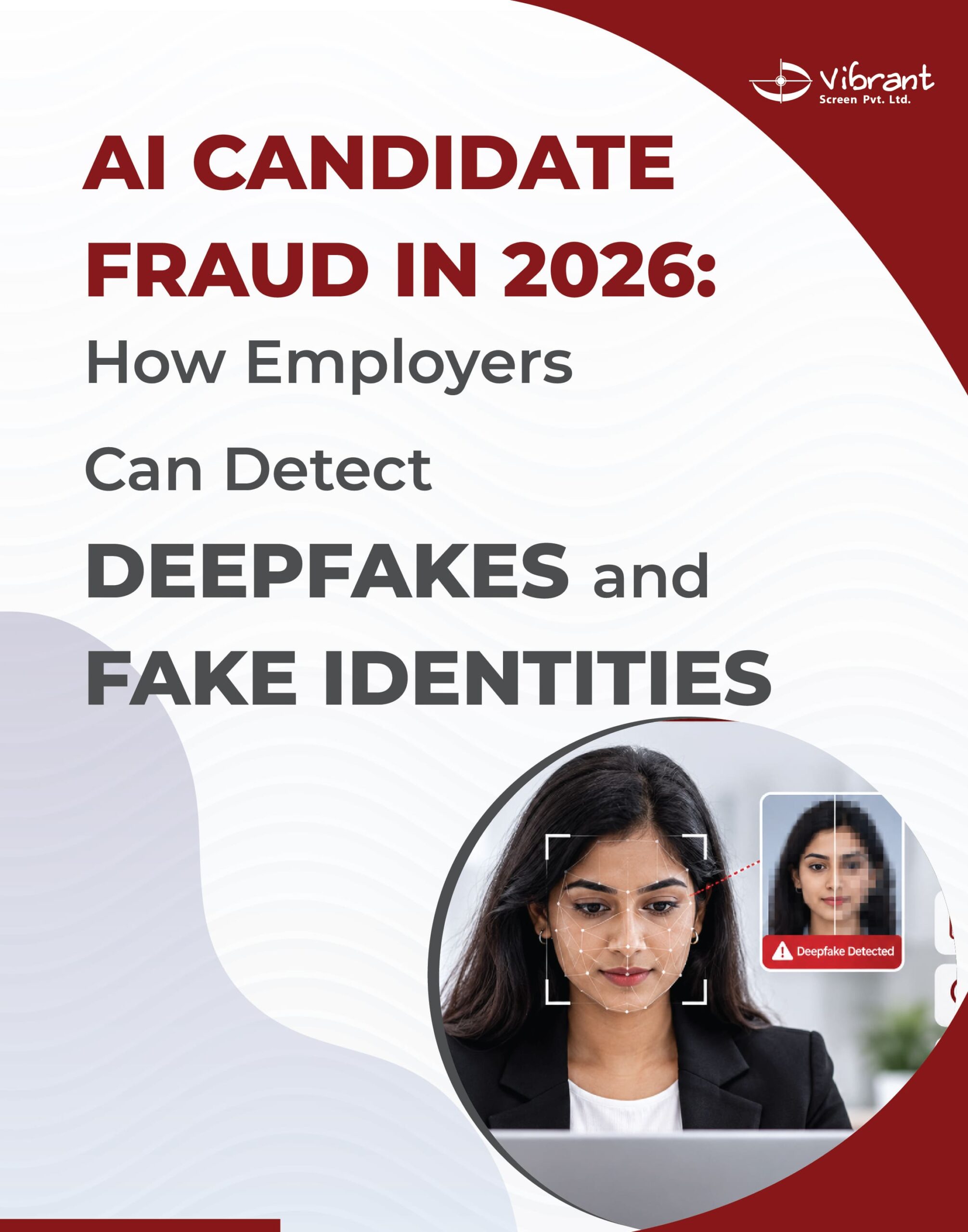
A candidate submits a convincing CV, attends a video interview and clears the initial screening. The documents appear genuine, and the interview raises no immediate concerns. But is the person on screen actually the individual who applied for the job?
Remote recruitment has made hiring more accessible, but it has also created opportunities for identity manipulation. AI tools can now support voice cloning, manipulated video feeds and fabricated documents. Some applicants may even use another person to attend an interview on their behalf.
For employers, AI candidate fraud creates a risk that goes beyond inaccurate CVs. A fraudulent applicant could gain access to company systems, confidential information or sensitive business operations. Hiring teams need a verification process that establishes a candidate’s identity and checks their professional history before onboarding.
Table of Contents
ToggleWhat Is AI Candidate Fraud?
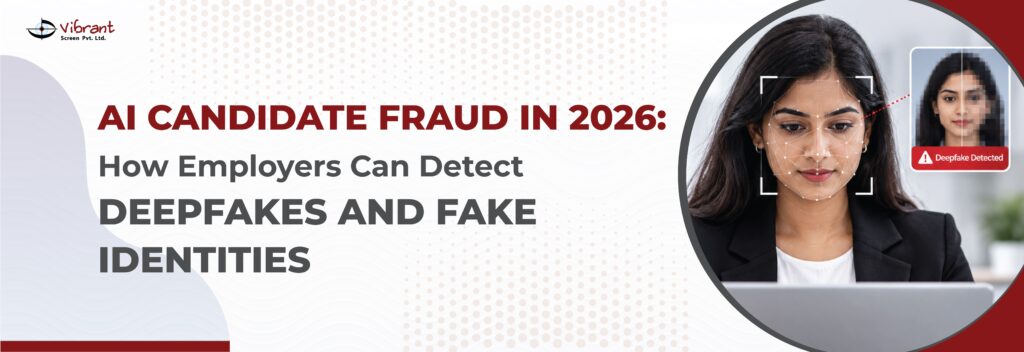
AI candidate fraud involves using artificial intelligence, manipulated media or impersonation techniques to misrepresent identity, qualifications or interview performance during recruitment.
Common forms include:
- Deepfake video: Software can manipulate a live video feed or place a synthetic face over another person’s appearance.
- Voice cloning: AI can reproduce someone’s voice from recorded audio. Fraudsters may use synthetic speech to impersonate an applicant.
- Stolen identities: Another person’s genuine personal information is used without permission to apply for a job.
- Synthetic identities: Genuine and fabricated details are combined to create a false identity.
- Fabricated credentials: Applicants submit altered certificates, false employment records or fabricated references.
AI-assisted CV writing is not fraud by itself. The concern arises when applicants use technology to misrepresent their qualifications, experience or identity.
How Employers Can Detect AI Candidate Fraud
No single visual clue or verification method can establish whether a candidate is genuine. Employers should combine interview procedures with identity, employment and education checks.
1. Introduce Structured Video Interview Checks
A video interview helps recruiters assess communication and technical knowledge, but it does not automatically confirm who is attending the call.
Ask candidates to explain specific projects, previous responsibilities and decisions they made in earlier roles. Unscripted questions can help interviewers assess whether the person understands the experience described in the application.
Manipulated video may sometimes show unusual facial movements, audio delays or poor lip synchronisation. These signs can justify additional checks, but they are not proof of fraud. Network problems and conferencing software can produce similar effects.
Employers should treat suspicious visual or audio behaviour as a reason to investigate, not as grounds for an automatic rejection.
2. Verify Government-Issued Identity Documents
A convincing video call cannot establish whether an identity document is genuine or belongs to the person applying for the job.
Before making a final hiring decision, employers should validate government-issued documents against available authoritative sources. Depending on the process, checks may include document authentication, liveness detection and matching a live selfie against the photograph on the submitted ID.
An identity verification service can help automate these checks. It can also identify mismatched information and possible document manipulation.
3. Check Employment and Education Records
Identity verification and credential verification address different risks. A candidate may have a genuine identity but provide an inaccurate employment history. In another case, an impersonator may use the identity of someone with legitimate qualifications.
Contact previous employers through independently verified channels. Confirm employment dates, job titles and other relevant details instead of relying entirely on experience letters submitted by the applicant. Academic qualifications should be checked with the issuing institution or an authorised verification source.
Professional background verification services help HR teams investigate discrepancies in employment and education records. Direct confirmation provides stronger evidence than applicant-submitted documents alone.
4. Look for Unusual Application Patterns
Patterns across applications may reveal suspicious activity, particularly when organisations recruit for several remote positions.
Repeated contact details, unexplained changes in candidate information, unusually similar applications or multiple applicants using the same communication channels may deserve further investigation.
Shared IP addresses can also be a signal, but they are not conclusive evidence. Candidates may use the same public network, recruitment agency or shared device. HR teams should examine the wider circumstances before reaching a conclusion.
Why Multi-Layered Verification Matters
Each verification method answers a different question. A government ID check does not confirm employment history, while an employment check cannot establish whether the person attending an interview is the named applicant.
Verification method | What it helps establish |
Government ID validation | Whether identity document details can be authenticated |
Liveness detection | Whether a real person is participating in the capture process |
Selfie-to-ID matching | Whether the live facial image matches the ID photograph |
Employment verification | Whether previous employment details can be confirmed |
Education verification | Whether claimed qualifications are supported by the issuing institution |
Combining these checks gives employers a clearer picture of a candidate’s identity and professional background. When information conflicts, recruiters should investigate the discrepancy and give the candidate an opportunity to clarify it.
Common Verification Mistakes to Avoid
Even a well-planned recruitment process can leave gaps. Employers should avoid:
- Treating deepfake detection results as conclusive proof of impersonation.
- Assuming an identity check also confirms employment history.
- Relying entirely on documents supplied by the applicant.
- Rejecting candidates automatically when a discrepancy appears.
- Completing verification only after onboarding.
- Applying the same screening process to every role without considering its responsibilities and access requirements.
Data-entry errors, outdated records and document-quality problems can also affect verification. A mismatch should prompt further investigation rather than an immediate assumption of fraud.
Continue Identity Checks Through Onboarding
Verification should not end when a candidate accepts an offer. Employers should reconfirm identity before issuing company equipment or granting access to internal systems.
The FBI has warned about remote IT worker schemes involving stolen identities, proxy arrangements and third parties seeking employment under false identities. Such cases demonstrate why identity checks matter during interviews, onboarding and remote employment.
Organisations should also review unexplained changes in contact details, equipment delivery arrangements and account activity. Access to confidential information should be granted according to the employee’s role and verified requirements.
Strengthen Candidate Verification with Vibrant Screen
AI-assisted impersonation has made it harder for employers to rely on resumes, video interviews and submitted documents alone. Hiring teams need a way to validate identity details and investigate inconsistencies before granting candidates access to company systems.
Where impersonation is the concern, the useful checks are the ones that test the person rather than the paperwork. Vibrant Screen’s identity verification service applies biometric liveness detection and selfie-to-ID facial matching to establish whether the individual completing verification is the one named on the document, with AI-powered image forensics flagging altered or fabricated IDs. Validation runs against government sources for Aadhaar, PAN, Passport, Voter ID and Driving Licence.
Not every case resolves on the document alone, so our platform also reads behavioural and technical fraud signals and converts them into a risk score, letting verification teams put their attention where the evidence points. Each report sets out the source validation, liveness match score, document metadata, tamper indicators and full audit trail behind that outcome, which matters when a flagged candidate disputes the result. Integration with HRMS, ATS and onboarding systems runs through APIs, SDKs and webhooks.
Employers can combine these checks with Vibrant Screen’s employment verification, education verification and other background verification services. This gives HR teams a broader view of a candidate’s identity, qualifications and employment history before completing the hiring process.
Explore Vibrant Screen’s identity verification service and background verification services to understand how its screening solutions can support your recruitment process.
Conclusion
AI candidate fraud can involve manipulated interviews, stolen identities, false employment records or fabricated qualifications. Employers need to establish who is behind an application and check whether the experience and credentials listed on the CV are genuine.
Identity validation, direct employment confirmation and education checks each play a distinct role. By starting verification during recruitment and continuing through onboarding, organisations can make better-informed hiring decisions and reduce the risks associated with remote recruitment.
Frequently Asked Questions
1. What is AI candidate fraud?
AI candidate fraud occurs when applicants or third parties use artificial intelligence, manipulated media or impersonation techniques to misrepresent identity, qualifications or interview performance during recruitment.
2. How can employers identify a deepfake job interview?
Employers can look for inconsistencies in video and audio, but visual clues alone cannot establish whether an interview is genuine. Structured identity checks, liveness detection and comparison with government-issued identification provide stronger evidence.
3. What is the difference between a synthetic identity and a stolen identity?
A stolen identity involves using another person’s personal information without permission. A synthetic identity combines genuine and fabricated details to create a false profile.
4. Can AI-generated resumes and certificates be detected?
Not reliably through appearance alone. Employers should confirm employment details with previous employers and academic qualifications with the issuing institution.
5. How does identity verification help prevent proxy hiring?
Identity verification can reduce proxy hiring risks by checking government-issued identification, using liveness detection and matching a live selfie with the submitted ID photograph. These checks help establish whether the person completing verification matches the claimed identity, although no single method guarantees fraud prevention.
6. What should employers verify before onboarding a remote employee?
Employers should reconfirm the candidate’s identity, complete relevant employment and education checks, and verify arrangements for company-issued equipment before granting access to internal systems.