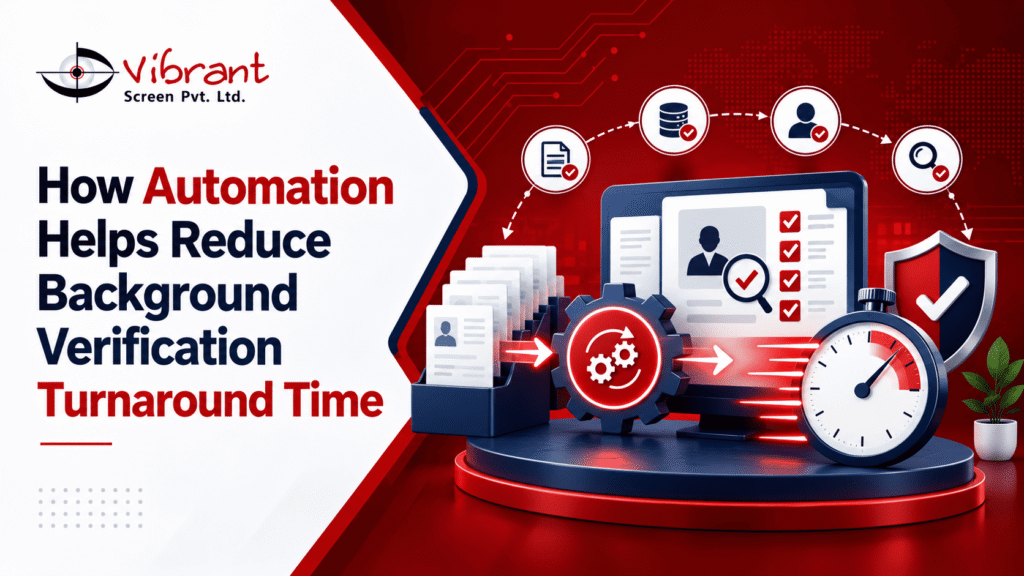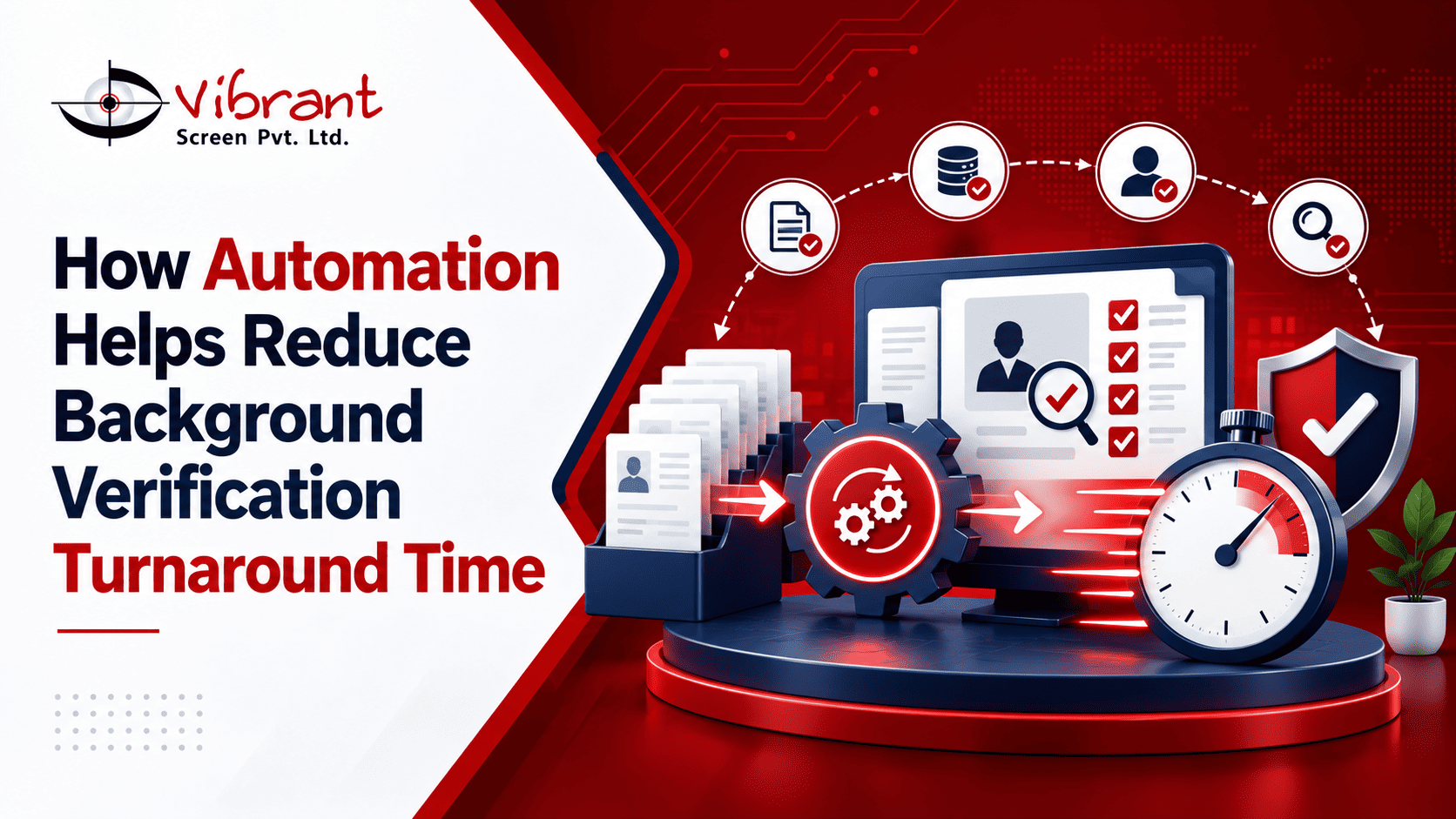
A background check for employment should support hiring, not become a bottleneck after a candidate accepts an offer. Traditional verification can slow the process through manual document collection, repeated follow-ups, data entry, multiple verification sources, and disconnected HR workflows. As hiring volumes grow, these administrative steps can place additional pressure on HR teams and delay onboarding. Automation offers a way to reduce this friction while keeping human expertise involved where background verification requires judgment or closer review.
Automation can reduce administrative delays, but actual turnaround still depends on the checks required, candidate documentation, and source responsiveness. Vibrant Screen‘s turnaround ranges from 24 hours to 12 days, depending on the type and number of checks, documentation availability, source responsiveness, and the complexity of the verification.
Table of Contents
ToggleWhy Does Background Verification Take Time?
A traditional verification workflow can slow down because several steps depend on manual coordination. Common causes include:- Manual data entry: Candidate information may need to be entered across separate systems.
- Missing documents: Incomplete or unclear submissions can delay verification.
- Repeated follow-ups: HR teams may spend time requesting pending documents.
- External responses: Employment and education checks can depend on responses from previous employers or institutions.
- Sequential processing: Running checks one after another can extend the overall timeline.
- Fragmented tracking: Spreadsheets and email threads make multiple cases harder to monitor.
How Automation Speeds Up Background Verification
1. Instant Verification Initiation
When candidate details are received through an integrated ATS, HRMS, or onboarding workflow, the verification process can begin without manual entry. This reduces the administrative gap between offer acceptance and the start of an employment background check.2. Automated Document Collection
Digital collection workflows replace scattered email exchanges with guided submission processes. Clear requirements and automated reminders can prompt candidates to provide missing or incomplete documents, reducing the follow-up work handled manually by HR teams.3. API-Based Data Verification
Intelligent automation in background verification can connect workflows with authorized systems and data sources. Vibrant Screen supports API and dashboard integrations with ATS and HRMS workflows, helping candidate and verification information move between connected platforms without repeated manual entry.4. Parallel Processing of Eligible Checks
Where the required information is available, eligible checks can be initiated in parallel rather than waiting for one administrative step to finish before another begins. This can shorten the overall processing time for identity, employment, education, and other applicable checks.5. Automated Follow-Ups and Status Tracking
Automated workflows can trigger reminders for outstanding responses, while centralized dashboards provide visibility into active cases. HR teams can monitor verification progress without repeatedly searching emails or requesting individual status updates.6. Exception-Based Human Review
Automation does not eliminate human validation. Instead, technology handles routine workflow activities while verification specialists focus on cases requiring closer attention. Mismatched information, missing details, or potential discrepancies can be routed for specialist review and resolution.Manual vs Automated Background Verification
| Workflow Stage | Manual Process | Automation-Supported Process |
|---|---|---|
| Case initiation | Manual data entry | ATS/HRMS workflow integration |
| Document collection | Emails and follow-ups | Digital forms and reminders |
| Check execution | Sequential processing | Parallel processing where applicable |
| Status tracking | Spreadsheets and emails | Centralized dashboard |
| Data handling | Repeated entry | System/API integrations |
| Case review | Manual handling | Automated routine steps with specialist review |
How Faster Verification Helps Hiring Teams
Smoother Candidate Onboarding
A faster verification workflow can reduce the waiting period between offer acceptance and onboarding. This helps hiring teams move candidates through the process without unnecessary administrative delays.Reduced HR Workload
Automating document collection, reminders, and status tracking reduces repetitive work. HR teams can spend more time on recruitment, interviews, and candidate engagement instead of chasing verification updates.Consistent Screening Workflows
System-driven workflows can standardise document collection, follow-ups, and verification processes across candidate files, reducing variations caused by manual administration.Centralised Case Visibility
A centralised dashboard gives recruiters and hiring managers visibility into completed, pending, and ongoing checks without relying on scattered email updates.How Vibrant Screen Uses Technology to Improve Verification Turnaround
Modern screening requires a technology-led framework that balances automation with human oversight. Vibrant Screen combines digital automation with human validation across its core verification capabilities, reflecting the technology-supported approach increasingly used by background verification companies in India.- AI-enabled automation: AI-supported workflows automate parts of the verification process and identify information requiring further review.
- Digital document collection: Guided candidate portals simplify document submission and reduce back-and-forth.
- API-ready integrations: ATS, HRMS, and onboarding integrations reduce duplicate data entry and manual handoffs.
- Centralised workflows: Unified platform views provide real-time case tracking.
- Expert validation: In-house specialists conduct source-level checks and multi-layered quality control.
- Audit-ready reporting:Verification reports provide clear outcomes, source references and supporting documentation, with delivery through a dashboard or API for easier HR review.